Blog

  • The Temple at Somnathpur

    The Temple at Somnathpur

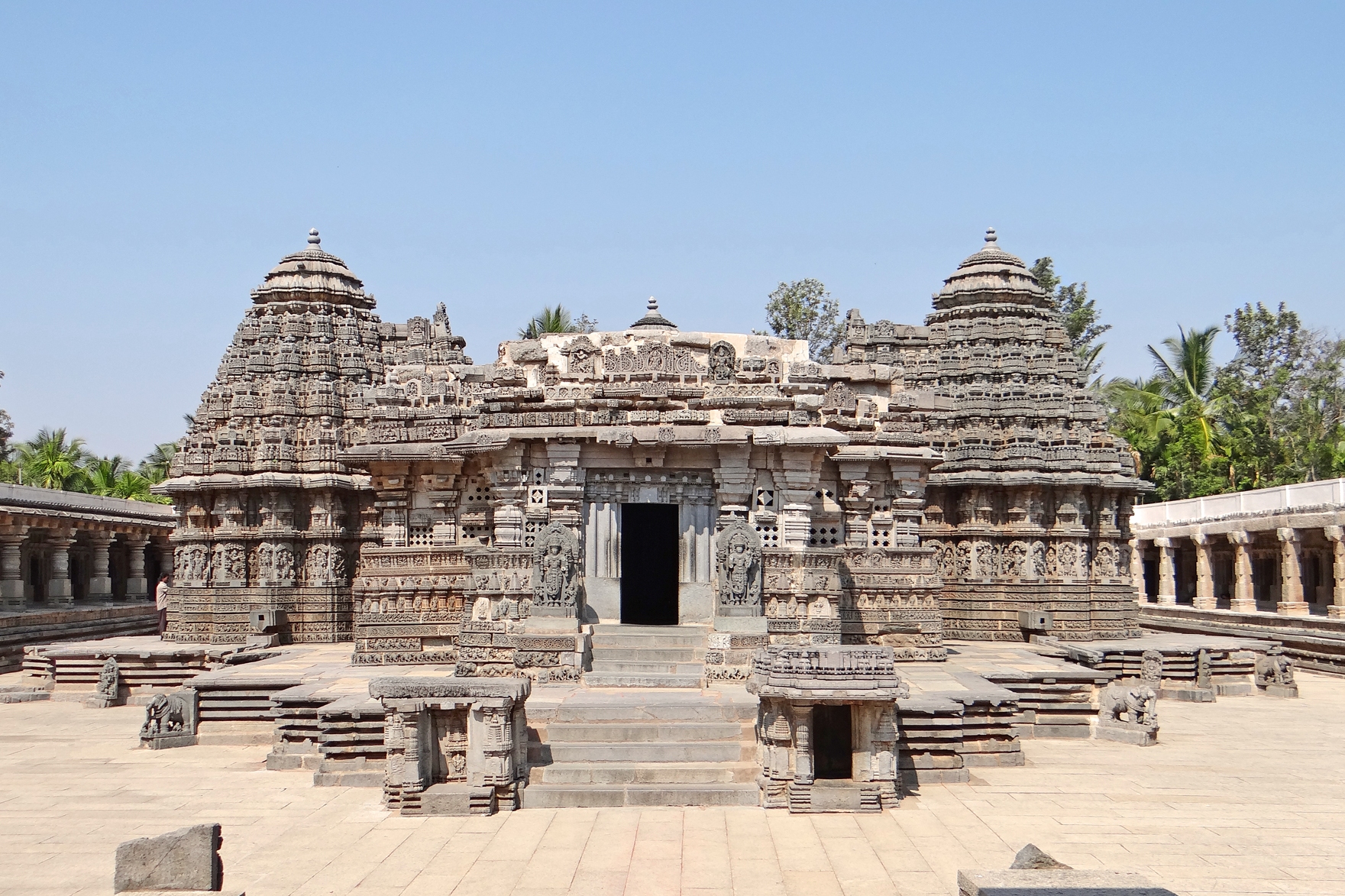
    The Chennakeshava Temple at Somnathpur is on the outskirts on the right bank of the river Kaveri. The temple is dedicated to Keshava(Lord Krishna), an honorific form of Lord Vishnu. It is an UNESCO World Heritage Site and it has attracted a lot of tourists recently.

    The temple is located 135 kms from Bangalore but 35 kms from Mysore City. This temple was constructed in 1268CE by Somanatha Dandanayaka after receiving funds from the reigning Hoysala king Narasimha III in 1268 CE.

    This temple of schist stone is built in the centre of a rectangular courtyard. It is enclosed in a prakara wall and it consists of 56 small shrines that once housed deities. This trikuta temple dedicated to Lord Vishnu faced east. The temple has a main door guarded by two dvarapalas(door guardians). It has on plan garbhagrihas(sanctums, antaralas(antechamber), a navaranga(central pillared hall) and dvaramandapa (entrance hall). The three garbhagrihas ont the west, north and south have the stone idols of Keshava, Janardhan and Venugopala respectively.

    The temple is erected on a raised stellate platform. The external walls of the temple are highly ornate. The exterior of the mandapas have plinth consisting of a 6 tiered frieze and above these are placed the kakshasana(seating with sloped back rest) with sculpture panels and stone screens. The exterior of the garbhagribha is divided into 3 parts adhistana(plinth), bhitti(wall), chadya(eave). The adhistana has 6 mouldings, while the bhitti has sculptures and most of them carry on their pedestals the names of the sculptors who made it. The chadhya that runs along the entire temple acts as a seperation layer between the bhitti and the superstructure of the temple. All of the 3 shrines have vesara shikharas.

    But this temple was no longer used as a place of worship once the Muslim army destroyed the idols in 1311 and 1326 even after the Vijayanagara Empire had rebuilt most of the temple. But it is still amazing that even with 500 sculptors, the building of the temple took about 58 years!
  • The Sonic Boom That Sparked My Curiosity: Exploring Supersonic Aircraft and Engines Like Ramjet and Scramjet

    Hi! I’m a Class 9 student living in Bangalore, a city famous for its aerospace history and Indian Air Force (IAF) presence. Once in a while during school hours, especially on clear days, we’d hear a loud BOOM in the sky. A sonic boom caused by a fast IAF aircraft.

    It was thrilling! My classmates would wonder what just flew by, and I would get goosebumps. That loud sound always fascinated me. I kept asking: How can an aircraft fly faster than sound? What causes that boom? What kind of engine makes that possible?

    That curiosity led me to explore the world of sonics and aircraft engines and in this post, I’d love to share what I’ve learned so far.

    What is a Sonic Boom?

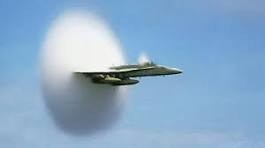
    When an aircraft travels faster than the speed of sound (about 343 m/s), it creates pressure waves in the air that combine into one big shockwave. This is what we hear on the ground as a sonic boom like a thunder in cloud sound.

    It’s like when a boat makes waves in water, but here, it’s making waves in the air!

    ( Courtesy to BBC for this picture)

    The Engines that makes Jets go Supersonic

    To go faster than sound, an aircraft needs powerful engines. Let’s look at a few amazing types: (The word Mach means standard unit of speeds for jets.)


    Ramjet – Riding on Air (Mach 2–4)

    A ramjet is a type of jet engine that works only when the aircraft is already moving fast. It has no moving parts .It simply uses the speed of the aircraft to compress air, mix it with fuel, and burn it.

    • Speed range: Works well at Mach 2 to Mach 4
    • Used in: Some missiles and experimental aircraft
    • Fun fact: It can’t start on its own the plane must be already fast!

    Sound: Creates a deep, roaring sound as the air rushes in and burns.

    Scramjet – The Hypersonic Beast (Mach 5+)

    A scramjet is like a ramjet, but it works at even higher speeds. In scramjets, the air moves so fast that it stays supersonic (faster than the speed of sound) even during combustion!

    • Speed range: Mach 5 and beyond!
    • Used in: Future aircraft and space planes
    • Fun fact: Could let us travel from India to the USA in under 2 hours someday.

    Sound: Very loud and intense, with complex noise from shockwaves and burning air.

    Cookie Dough


    Hearing a sonic boom during school in Bangalore wasn’t just exciting . It has ignited my curiosity. I started reading about engines like ramjets and scramjets and it opened up a whole new world of science and technology for me.

    If you’re curious like me, I encourage you to read, ask questions, and explore. Who knows maybe one of us will build the next generation of supersonic aircraft!

    Even though you might think that the pilots are in greater danger than us on the ground, the cockpits are engineered to withstand the extreme speed so that the pilots only feel a bump or a slight chillness.